BLOG
Now Is The Perfect Time To Reverse Your PCOS
Have you been having irregular or totally absent menstrual cycles? Maybe, hair loss or acne? Or maybe you’ve been trying to get pregnant for months and it’s just not happening. Or you’re worried about how easily you’ll be able to get pregnant in the future.
I know what that is like because I’ve been there, not to mention worked with so many women experiencing the exact same thoughts and symptoms.
To watch the live FB video that this information is pulled from, head here!
Have you been having irregular or totally absent menstrual cycles? Maybe, hair loss or acne? Or maybe you’ve been trying to get pregnant for months and it’s just not happening. Or you’re worried about how easily you’ll be able to get pregnant in the future.
I know what that is like because I’ve been there, not to mention worked with so many women experiencing the exact same thoughts and symptoms.
I was diagnosed with PCOS when I was in my early twenties after struggling for years with severe symptoms. I hadn’t had a period in two years, my hair was falling out, there was acne all over my jaw, and I was depressed and feeling really, really poorly about myself; I went to several doctors who told me that I should get used to my symptoms and that there really wasn’t anything I could do besides going back on hormonal birth control.
For some reason I just knew that that wasn’t the right thing for me. I had been on hormonal birth control before and I didn’t like who I was, not to mention there were so many side effects—instinctively I knew that that wasn’t how a young woman was suppose to feel, so I kept asking around. Finally, I was put in touch with a naturopathic doctor, and as soon as I sat down he seemed to know exactly what was happening on a foundational level. He then ran a few tests and confirmed that I had PCOS when a lot of other doctors didn’t take the time to understand what was going on.
And within four months I was cycling again, my skin was clearing, and I was generally feeling better about myself; I was nourishing my body and really giving it what it needed instead of just trying to mask symptoms with the birth control. The best thing about it was when I was ready to get pregnant, about ten years after all of this, I was able to do so really easily; I knew my body was healthy and fertile, so as soon as the timing was right, it happened, and now I have a beautiful daughter.
This is a huge part of why I’ve decided to help hundreds of women with PCOS and other hormonal imbalances, helping to restore their cycles, and their fertility; I’m so grateful to be able to share this message and guidance with other women so that they too can heal and reverse their PCOS, living the lives they know they’re mean’t to live.
We get there by working to individualize a plan.
To support the gut health, thyroid health, rebalance the adrenal glands, all the while reducing inflammation, which is always present in PCOS. The other two things that are emphasizing stress management and treating the emotional aspects of a person and of this particular diagnoses or constellation of symptoms.
The typical approach of dealing with PCOS is through hormonal birth control pills and blood sugar stabilizing medications. Once on those, you stay on them until you’re ready to get pregnant, and once you come off of them, you just hope that that your body is going to naturally bounce back, though more often than not, it doesn’t. At this point, you’re either encouraged to take other medications to help you get pregnant or to rely on pretty invasive and very, very expensive infertility treatments like IVF or IUI.
Unfortunately, those medications simply mask the symptoms and don’t address the underlying issues, which are a lot of what I was speaking about before: your gut health, adrenal health, how you manage your stress, and how your inflammation levels are at the moment. And that doesn’t even address all the side effects you might be experiencing because of those medications.
What I choose to do instead is to really dig deeper, rebalancing your body on a foundational level and making it so you don’t experience those symptoms anymore because your hormones, gut, and adrenals are working as they should and you’re living more in balance with the natural rhythms.
Like I mentioned before, this condition is something that I’m really passionate about because I’ve been there myself. I think it’s really important that we start working on that level so that you can start feeling better while pursuing your dreams; whether that’s starting a family or starting a business, you’re worth it, and this is one of the best ways that I know how to make that happen.
So, if you are interested in learning more, you’re welcome to message or email me or go ahead and book an appointment here.
I’m so excited to share this with you and I really look forward to hearing from you!
Feeding Your Baby
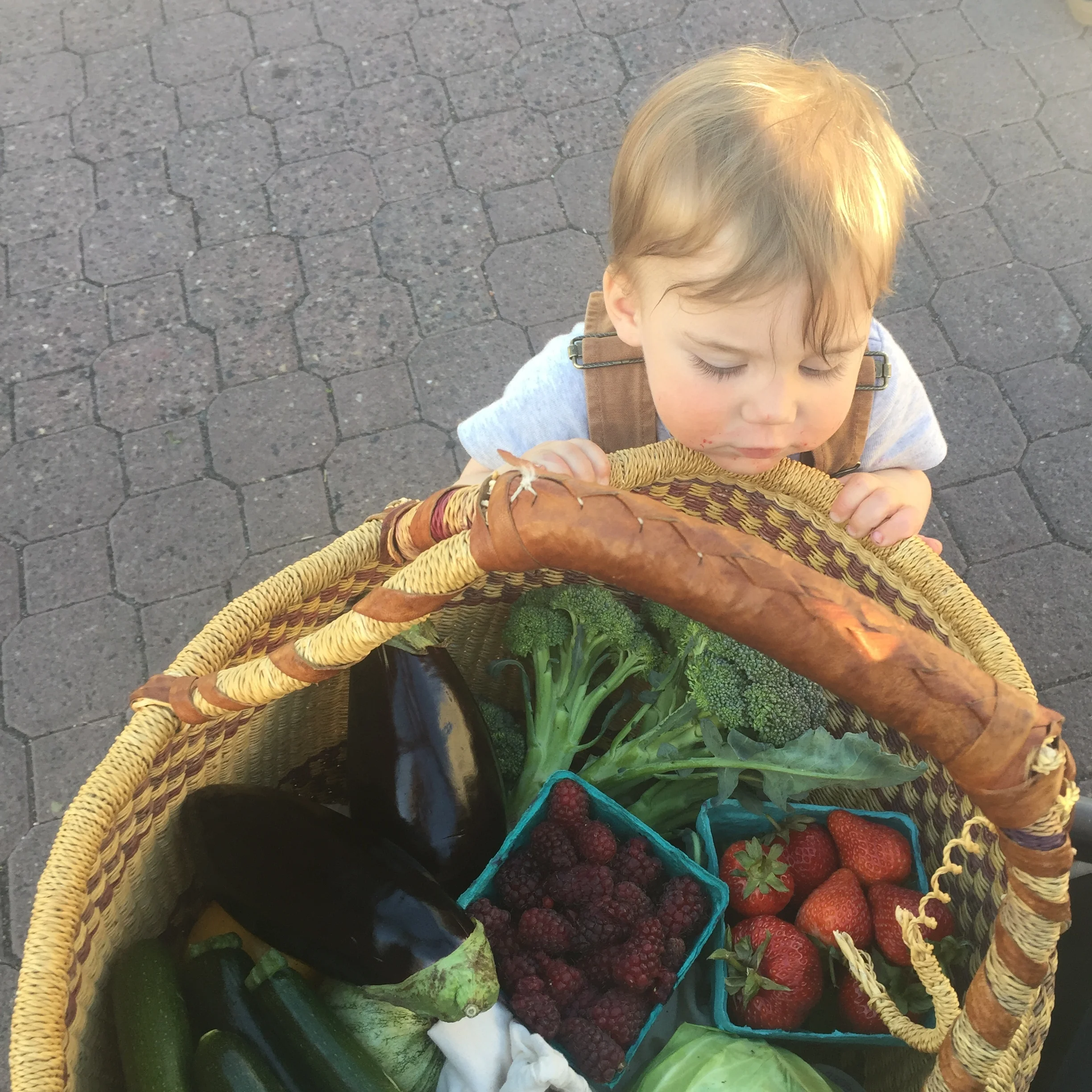
Start looking for key signs of readiness in your child, such as teeth and the ability to sit on their own. If your babe is starting to show interest in food, like reaching, opening their mouths and looking like they want to have a bite of what you’re eating, it’s also a sign of readiness. These things generally start to show up somewhere between 5 and 7 months of age. That being said, I know kiddos that don’t get teeth until they are 16 months or more so you don’t need to have all these things in place in order to start solid foods.
Deciding when, how and what to introduce solid food-wise to your baby can feel like big decisions. Here’s are some key guidelines to keeping it simple, healthy and realistic.
When
Start looking for key signs of readiness in your child, such as teeth and the ability to sit on their own. If your babe is starting to show interest in food, like reaching, opening their mouths and looking like they want to have a bite of what you’re eating, it’s also a sign of readiness. These things generally start to show up somewhere between 5 and 7 months of age. That being said, I know kiddos that don’t get teeth until they are 16 months or more so you don’t need to have all these things in place in order to start solid foods.
What
A focus on nutrient-dense foods, just like for you, is key when choosing what to feed your child. They don’t eat that much so making sure the food they are consuming is full of minerals, fats, protein and vitamins is extra important. I advice avoiding grains until a baby is at least one year old because kids don’t start producing amylase until they’re a little older, which means there is a chance that grains won’t be properly digested, which could lead to allergies or digestive issues. As foods are introduced, look for changes in stool consistency, a red ring around the anus and skin changes, such as eczema, rash, etc to determine whether a food is well-tolerated or not.
Here’s a list of some of my favorite foods to start introducing:
Avocado
Egg yolk (eggs are a common allergy but the yolks tend to be less of an issue)
Bone broth
Banana
Pates and organ meats
Sardines
Roasted and mashed vegetables such as winter squash and carrots. Mashing with bone broth and/or some grass-fed butter or coconut oil is a great way to add healthy fats
Many kids love flavor so don’t be afraid to add simple spices like mild curry powder, cinnamon, ginger and some sea salt. If it tastes good, they are much more likely to be interested in eating it.
A note on dairy: Cow’s milk dairy is often an issue for people of all ages so caution in introducing it. I prefer fermented dairy such as cheese and yogurt to straight milk. If a child is eating the foods above and still having breastmilk (or formula) they will be getting the nutrients they need without the dairy. That being said, you’re welcome to try including dairy products and if you decide to do so, I like it to be organic and full fat. Goat milk is a great option and is often better tolerated than cow’s milk dairy.
How
There are two major schools of thought around what format to introduce foods. Baby Led-Weaning (BLW) and purees/mashed food. Each has their pros and cons and I think both lead to healthy, well-fed babies when the food quality is the main focus.
Baby Led-Weaning (BLW): Large chunks of food are given and the baby is able to gnaw on the food, helping them to learn the need for chewing. I think this is a great thing to try and it can also be really messy. Food generally ends up all over the child and the high chair. There is often some amount of choking involved in the early days as well as babies learn the need to break down the food, to some degree, in order to be able to swallow it. That can be scary for some parents and knowing that is important in order to be successful and have it be the right fit. I recommend parents do some more reading about this method if they’re interested in having it as an option for the baby.
Purees/mashed foods: This is where the parent breaks down the food mechanically before offering it to the child. That can be done with a blender, food processor, or in some environments, the parent pre-chewing meats for their baby. Parents have been doing this for their babies for thousands of years so while it might not be super socially acceptable these days, it’s a great and efficient way of making particularly meat the right consistency for a baby to eat. Additional benefits of this is that the enzymes present in the parents mouth help begin to break down the food for the child. That being said, kitchen devices can also absolutely be used and then the baby is spoon fed by the parent. In this case, the baby has to be willing to be fed, which sometimes is the case and sometimes isn’t.
Like most things, I think experimentation and getting curious is the way to go when introducing solid foods to your baby. It can feel overwhelming at times but soon enough you’ll find what works for you and your family. Try not to be too attached to how much food your baby eats before his/her first birthday as it’s just a time for trying new things. Most of their nutrition should still be coming from breastmilk or formula until that time. Keep offering foods even if they don’t accept it the first time as it can take up to 15 tries for new flavors to be welcomed. And as always, your intuition is your best guide.